
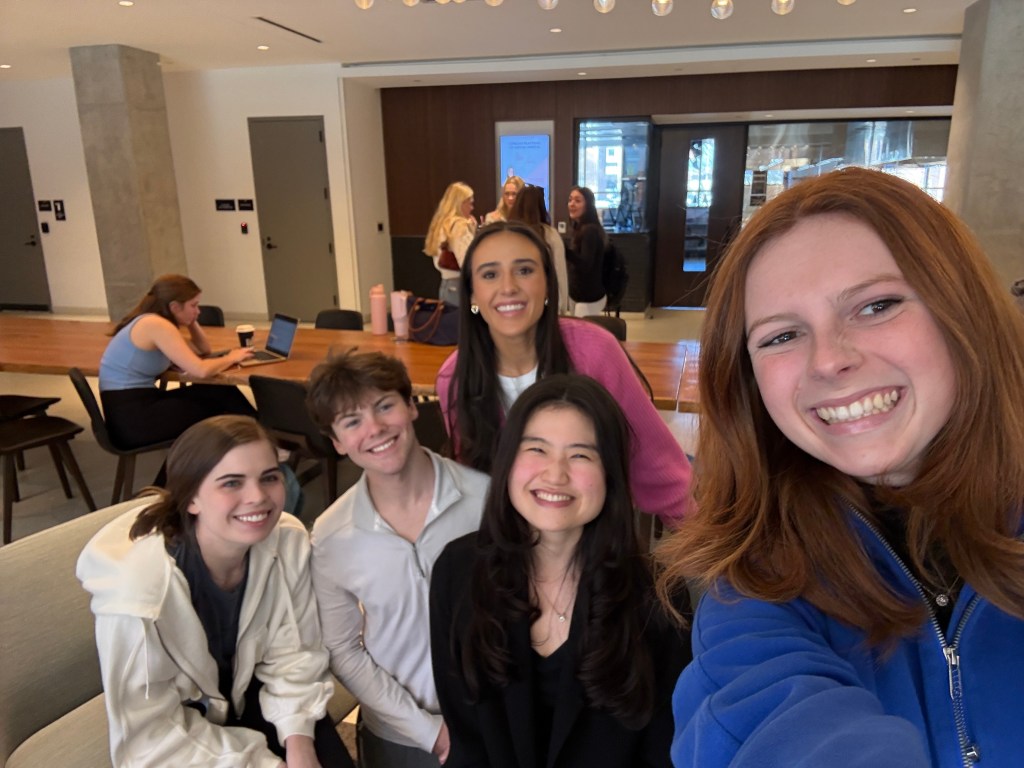
Esther Kim
I had the opportunity to meet a grad student here at Auburn University. Esther Kim is 26 and originally from Seoul, South Korea. She teaches a public speaking class while simultaneously working on her grad school thesis. Esther was unbelievably kind and friendly. She talked about how she came to the States when she was 14 years old as an exchange student to study English. She told us about her host family and how she stayed with them in rural Georgia. Where she’s from is extremely different; she talked about how seeing this much greenery and nature was a huge difference from the busy city life back home. We talked about the major differences she’s experienced between the two countries in terms of Hofstede’s cultural dimensions.
One of the most interesting dimensions we talked about was context. She told us how in South Korea, a high context culture, it can be seen as disrespectful to look a person of authority in the eye when they’re speaking. She specifically had trouble with this when first coming to live with her host family. She said they would be talking to her, and they assumed her lack of eye contact was because she was extremely shy or wasn’t giving them their full attention.
This is because the culture here in the states is a low context culture, so we view eye contact as a sign of respect and that were listening attentively to whoever is speaking. She also talked about how here, when we greet each other or simply walk by someone, we have a smile on our face. Esther noted this as her favorite thing Americans do differently in terms of greetings. In South Korea, she said that people might think that you are laughing at them or being disrespectful. I loved getting to know Esther; her strength was an inspiration. She misses her family and her home country and hasn’t been to South Korea in 3 years. When she was telling us about her mother, she spoke with such pride and honor. Her mother helps run a ministry back home in South Korea, helping refugees who come from North Korea. Her father, just like mine, is a pastor, which I thought was a really unique connection and something we can talk about in later meetings.
She mentioned her brother and her childhood growing up. I asked her if there was a big difference in terms of gender roles between what her brother was encouraged to do and what she was encouraged to do. Her grandparents and their generation believed in more structured gender roles, and essentially, what they wanted their son and grandson to do, they would do. Esther said that her mother didn’t really have any restrictions on what they should do and encouraged them to do whatever made them happy. Esther said she isn’t very athletic, so she would take lessons in violin and piano after school. Another topic I found very interesting was her childhood in terms of schooling. What blew my mind was learning that in South Korea, children start learning english at as young as 3 years old. She said that English was structured into their curriculum. Here in the States, we have foreign languages that are a part of our curriculum, but we get to decide if we want to take Spanish, French, German, or simplified Chinese, which is what I took in middle school. Esther was lovely, and I can’t wait to learn even more about her culture and her as a person.
Second Meeting
During the second meeting with Esther, we got to hear all about the more niche aspects of her culture. For this assignment, we talked about food and the traditions that come with it. Our conversation ended up being really interesting because food plays such a big role in culture, family, and everyday life. Hearing about her experiences helped me learn a lot about Korean food customs and also made me think about my own memories connected to food.
One of Esther’s favorite foods from home is kimchi stew, something I knew nothing about and had never heard of before. She explained that kimchi is fermented cabbage that is seasoned with spices like peppers and garlic. It’s considered very healthy and is something people eat all the time in Korea. Kimchi is usually served as a side dish with meals, and she said it’s almost always on the table at Korean restaurants. She compared it to how chips and salsa are served at Mexican restaurants in the United States. Kimchi stew is also considered a comforting food, especially when someone is sick, which reminded me of how people here often eat things like chicken soup when they don’t feel well. Something that surprised me was how important breakfast is in Korea. Esther told me that when she was growing up, breakfast was usually the biggest meal of the day because it was the only time the whole family could get together before everyone left for work or school. Her family would eat things like rice, soup, kimchi, vegetables, and different side dishes. In the United States, I feel like dinner is usually the time when families gather together, so it was interesting to hear how that role is filled by breakfast in her culture.
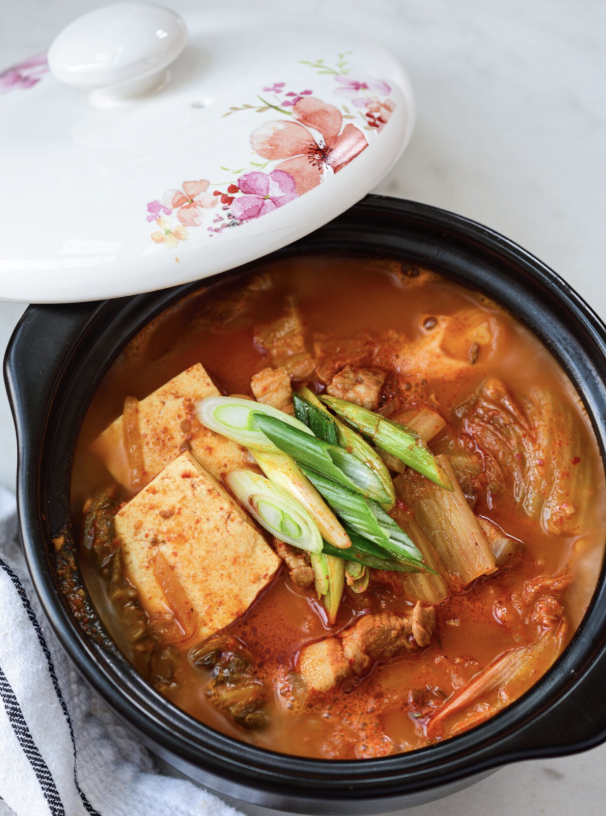
Kimchi Stew
She also talked about how meals are served differently in Korea. Instead of everyone having their own plate, a lot of the food is placed in the middle of the table so everyone can share. People usually eat with spoons and chopsticks instead of forks. Esther said she didn’t actually use a fork until she was about nine or ten years old because her grandmother mostly used traditional utensils. That was surprising to me because I’ve always used forks growing up. Another tradition Esther told me about is a holiday called Chuseok, which is similar to Thanksgiving in the United States. Families gather together to celebrate and eat a lot of food. One dish she mentioned is called “jeon,” which is made by frying vegetables like zucchini, mushrooms, or eggplant in egg batter, almost like pancakes. Hearing about the big family gatherings reminded me a lot of holidays with my own family, where everyone comes together, and food is a big part of the celebration.
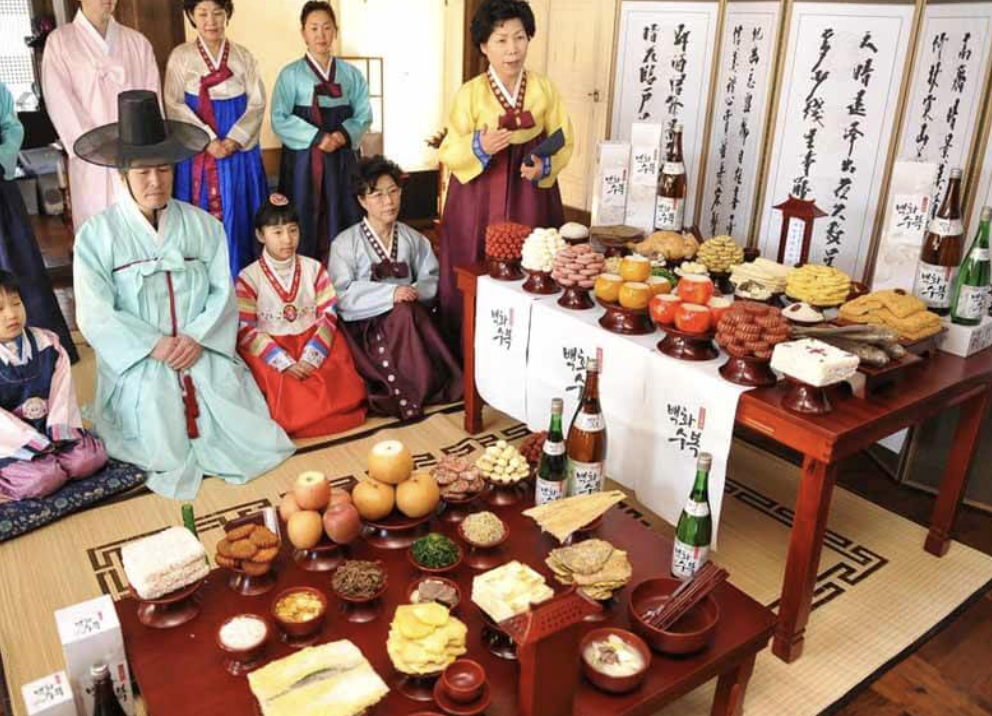
Chuseok
Since coming to the United States, Esther has tried a lot of new foods. She said one of her favorite Southern foods is shrimp and grits, especially cheese grits. She also likes casseroles, like broccoli casserole. However, she noticed that portions in the United States are usually much bigger than in Korea. In Korea, meals tend to be smaller, and people don’t usually take leftovers home in to-go boxes like we often do here. Talking with Esther made me realize how much food connects to culture and family. Even though the specific foods and traditions are different, both of our cultures use meals as a way to bring people together. Whether it’s a big family breakfast in Korea or a holiday dinner in the United States, food plays a huge role in creating memories and spending time with the people who matter most.
 Abbey Armbruster